
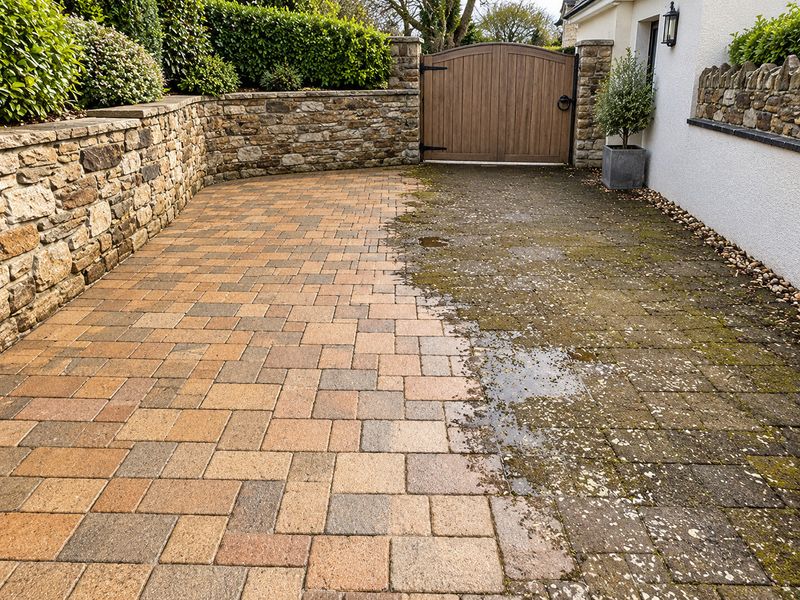
How Pressure Washing Cleans Block Paving
Pressure washing uses water delivered under pressure to help remove suitable dirt and surface contamination. The effect depends on equipment, settings, technique and the condition of the paving. Different installations may require different cleaning approaches.
Four Ways Pressure Washing Can Damage Block Paving
Risk 1 — Removing Jointing Sand
Risk 2 — Damaging Vulnerable Blocks
Risk 3 — Affecting Existing Sealants
Risk 4 — Disturbing Weak Joints or Edges
How Professionals Assess Block Paving Before Cleaning
An appropriate assessment considers:
- Block condition.
- Jointing sand levels.
- Existing coatings.
- Type of contamination.
- Drainage and runoff.
- Access and surrounding materials.
- Manufacturer or installer recommendations where available.
The aim is to select a method suitable for the surface rather than treating every driveway identically.
Can You Pressure Wash Block Paving Yourself?
Some homeowners use pressure washers for driveway maintenance. However, unsuitable settings or technique can cause damage, and electrical equipment and wet outdoor areas introduce additional safety considerations.
If you're unsure about the paving's condition or the correct method, professional advice may be sensible. Always follow the equipment and paving manufacturer's guidance.
Should Block Paving Be Re-Sanded Afterwards?
Where cleaning removes or disturbs jointing sand, replenishment may be appropriate. The paving should be assessed to determine whether re-sanding is needed and which material is suitable. Learn more about re-sanding block paving.
What About Sealing After Pressure Washing?
Some compatible block-paved surfaces may be suitable for sealing after appropriate cleaning and preparation. Sealing is optional and depends on the surface condition, existing products and manufacturer's guidance. It should not be presented as essential after every clean. Learn more about driveway sealing.
Professional Driveway Cleaning in Essex
Essex Exteriors assesses suitable driveway cleaning enquiries across Billericay, Chelmsford, Brentwood, Wickford, Basildon, Rayleigh and surrounding areas.
If you're considering having your block paving cleaned, Essex Exteriors can assess the surface and recommend a suitable approach.
Explore Driveway Cleaning in Essex